
Abuja, April 20, 2026
The Alumni Association of the National Institute (AANI) has called for urgent and comprehensive reforms to Nigeria’s security architecture, with a strong push for the establishment of State Police, while emphasizing that justice, accountability, and societal orientation remain critical to achieving lasting peace.
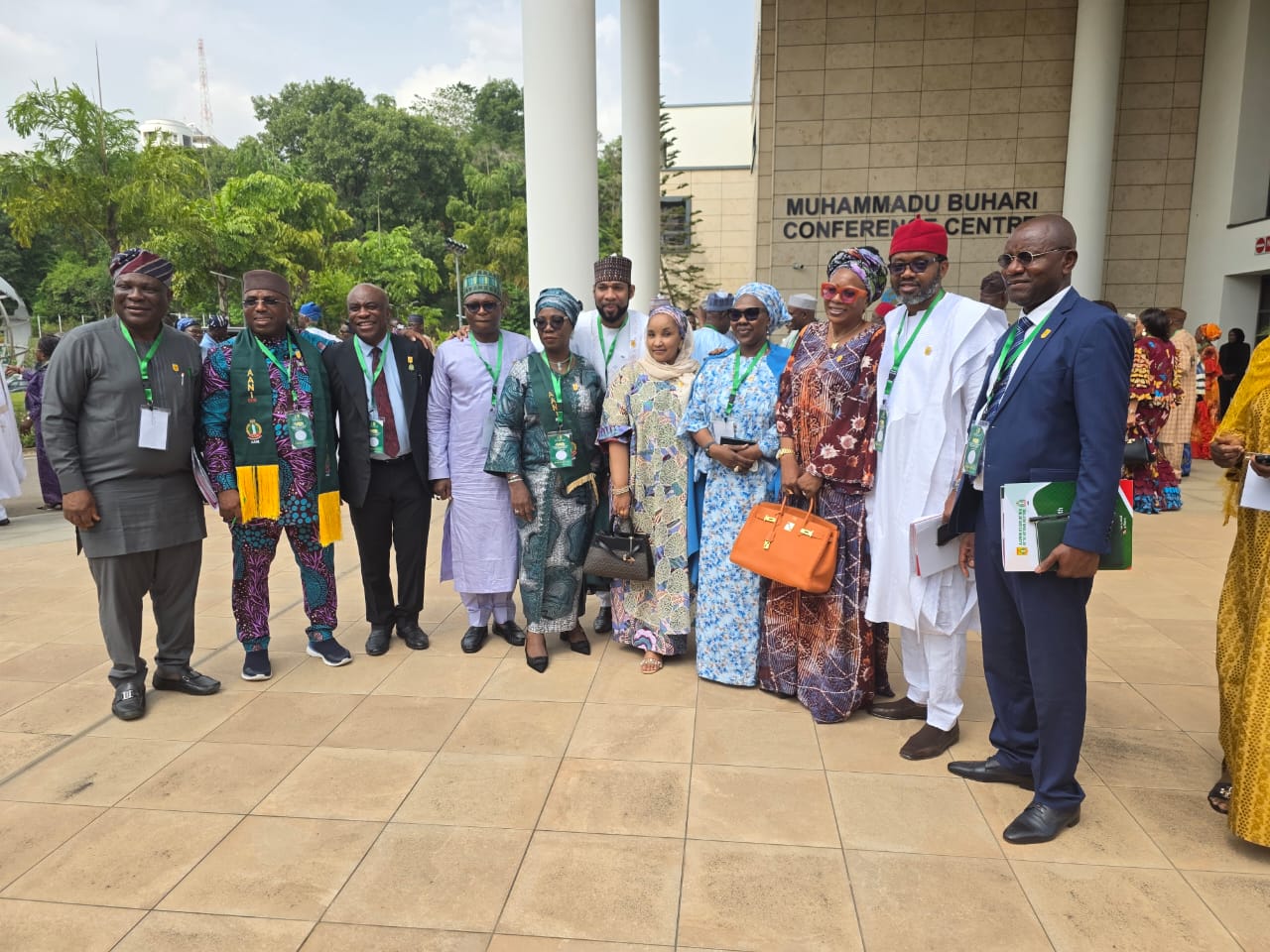
This was the thrust of discussions at AANI’s 46th Annual General Meeting (AGM) and National Colloquium, held at the Muhammadu Buhari Conference Centre, Abuja, under the theme: “State Police and Community Policing: Challenges, Options and Opportunities.”
The Director-General of the Department of State Services (DSS), Mr. Oluwatosin Adeola Ajayi, who was the Special Guest of Honour, underscored that President Bola Ahmed Tinubu, GCFR, is fully committed to tackling the security challenges bedeviling the nation. The DG DSS emphasized that beyond structural reforms, Nigeria must confront deeper issues of trust gaps and societal orientation.
He charged community rulers, religious leaders, and grassroots mobilizers to rise to their responsibilities, noting that security is not only institutional but a shared societal duty. He further reiterated the centrality of justice, stating that “where there is justice, peace comes naturally,” underscoring fairness and equity as the foundation of national stability.
The DG noted that State Policing is not only a legitimate exercise of state authority to tackle immediate threats, but also one of the most effective mechanisms for coordinating and harmonising Nigeria’s numerous quasi-law enforcement outfits currently operating across states.
The high-level event, chaired by HE Professor Tijjani Bande, GCON, former Permanent Representative of Nigeria to the United Nations and Director General of the National Institute for Policy and Strategic Studies (NIPSS), attracted key stakeholders including the Director General of NIPSS, Professor Ayo Omotayo, representatives of the Secretary to the Government of the Federation, Head of Service of the Federation, Chief of Defence Staff, Inspector General of Police, Nigerian Navy, and other Service Chiefs, as well as delegations from Zamfara and Sokoto State Governments, alongside senior security and intelligence officials.
In his remarks, AANI President, Ambassador Emmanuel Obi Okafor, mni, described Nigeria’s current security situation as a defining moment, stressing that the country’s centralised policing system is overstretched and at variance with federalism. He noted that Nigeria continues to grapple with terrorism, banditry, kidnapping, farmers-herders violence, separatist agitations, and oil theft, compounded by poverty, youth unemployment, and weak governance.
Delivering the keynote address, Professor Femi Mimiko highlighted the limitations of Nigeria’s single-layer policing structure, noting its inconsistency with federal principles. He advocated a decentralised system that enhances responsiveness and accountability, while cautioning that fears of misuse, ethnic bias, and fragmentation must be addressed through clear constitutional safeguards.
Deliberations revealed that Nigeria remains significantly under-policed, with a current strength of 371,800 officers and a police-to-population ratio of about 1:740, far below the United Nations standard of 1:450. Participants identified intelligence gaps, weak community trust, corruption, inadequate manpower, and over-centralisation as key drivers of insecurity. The deployment of the military for policing duties in almost all states was also flagged as unsustainable.
The Chairman of the occasion advised that the colloquium critically examine issues around the State Policing option to develop a workable framework for implementation. Delegates agreed that the concept of State Police is not new, and that past failures should not foreclose adoption today. Rather, flaws must be examined and solutions proffered.
The AGM endorsed an intelligence-driven Hybrid Policing Model that integrates State Police with existing community policing structures. Key recommendations included:
Constitutional Amendment:
I. Urgent amendment of Sections 214 and 215 of the 1999
ii. Constitution to move policing from the Exclusive Legislative List to the Concurrent List.
iii.Clear Jurisdiction: Delineation of functional boundaries between federal and state police, including thresholds on weapons and personnel, and defined intervention protocols.
iv. Training & Coordination: Training for State Police to be coordinated by the Nigeria Police Force, with formal structures for inter-state and inter-agency collaboration.
v. Funding & Accountability: Appropriately defined funding mechanisms and stronger accountability frameworks to prevent abuse.
vi. Whole-of-Society Approach: Recognition that kinetic means alone cannot solve insecurity. Justice, value reorientation, leadership, and community engagement must complement security operations.
The meeting called on the National Assembly to expedite constitutional amendments to enable the policing reforms and urged all levels of government to ensure justice, stating that peace will not prevail without fairness.
AANI reaffirmed its commitment to providing strategic, evidence-based policy solutions towards building a safer, more secure, and united Nigeria, noting that State Police, properly regulated, offers opportunities for improved responsiveness, better intelligence, employment generation, and restored public trust.